Article image
Surrender
What Surrender Actually Means
It is the most misused word in both recovery and modern spirituality, and everything else depends on getting it right.
7 min read
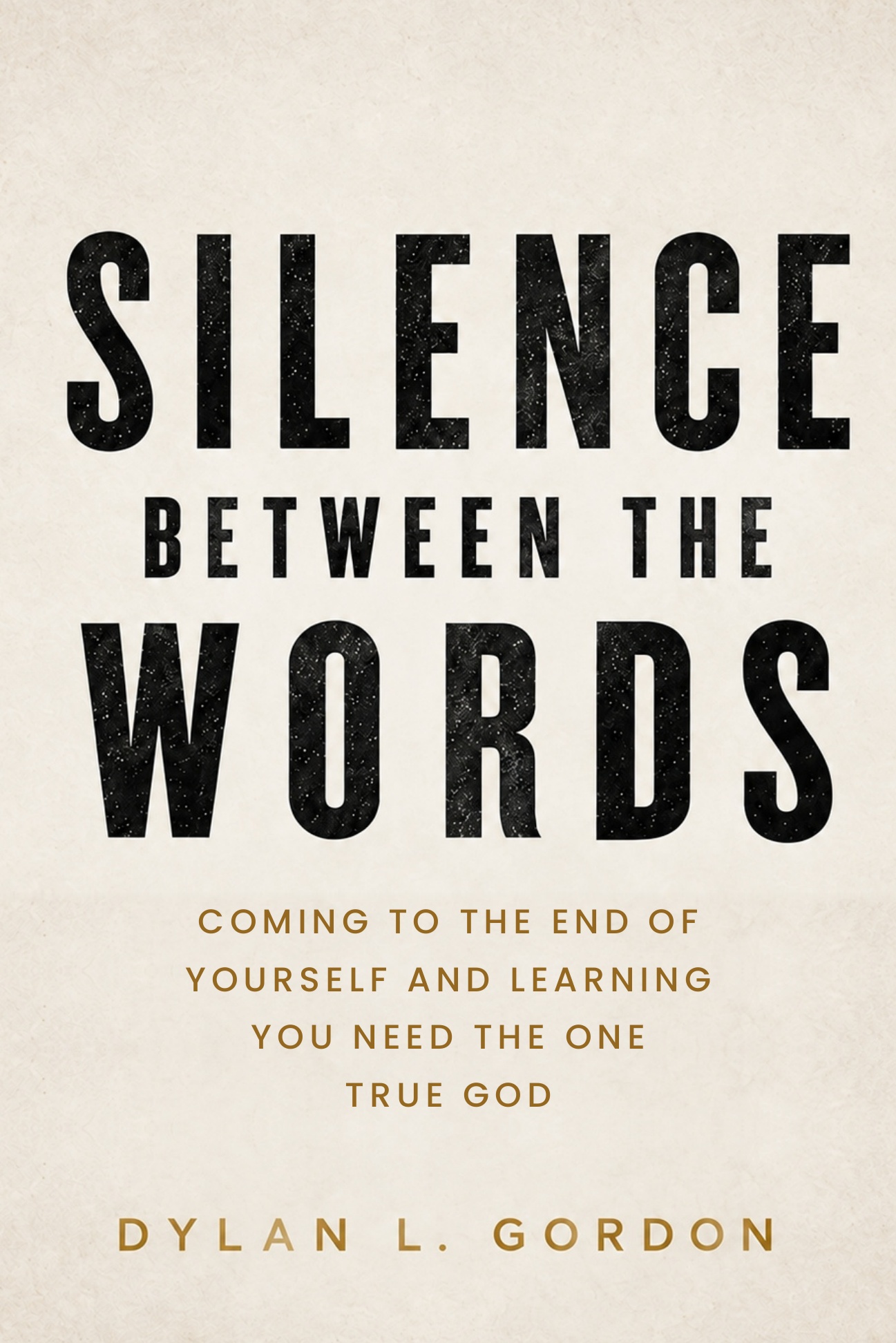
Available on Amazon
Coming to the End of Yourself and Learning You Need the One True God
The Four Pillars · 33 Days of Return · 161 Days of Prayer
A man reached the end of himself — addiction, a broken marriage, a suicide attempt, twenty-seven days in jail — and in the quiet heard two words: Follow Me. This is the account of what happened next, and of the God who had never been far.
About the book
Silence Between the Words is a testimony. It begins in collapse: addiction, separation from his wife and children, an attempt on his own life, an arrest, and twenty-seven days in a county jail. On a jail bed, in a quiet he had spent years avoiding, Dylan Gordon heard two words with unusual clarity. Follow Me.
What followed was not a straight line. Dylan went looking for a way to rebuild and found the modern language of transformation — identity, surrender, stillness, gratitude, alignment, becoming. Much of it sounded remarkably biblical. Eventually he understood why, and understood what had been removed from it. He had made God a feature of a system he was building instead of the foundation everything else stood on. So he tore the system down.
This book is what he rebuilt, under Scripture and the authority of Christ: four pillars resting on repentance, the renewing of the mind, obedience and sanctification; a short daily rhythm of turning toward God; thirty-three days of returning; and one hundred and sixty-one days of a husband praying for his wife, silences left in.
It is not a program for getting the life you want. It is an account of being met, and an invitation to return.
I had made God a feature of something I was building. He is not a feature.
Be still, and know that I am God;
The line the title of the book is standing next to.
Dylan wrote it for the man he was on that jail bed, and for the man he was afterward — the one who had already read the books, already understood his patterns, already had the vocabulary, and still could not change himself.
He also wrote it because he had taught some of what he now confronts. He built a framework, positioned it, and turned something sacred into intellectual property. Naming that publicly is part of the book.
Inside the book
Part Part One
The collapse, the jail bed, the two words, the return — and the detour that followed it.
Part Part Two
Fourteen modern spiritual and self-help ideas placed beside the Scripture whose language or mechanism they resemble. Confessional rather than combative: Dylan believed some of these things, and taught some of them.
Part Part Three
Surrender. Align. Embody. Emerge. Rebuilt under repentance, the renewing of the mind and abiding, obedience, and sanctification.
Part Part Four
Four short turnings toward God through an ordinary day — See, Hear, Feel, Know. Roughly fifteen minutes in total.
Part Part Five
A working journal, not an ornament. Thirty-three days that establish a rhythm rather than complete a person.
Part Part Six
One hundred and sixty-one days of a husband praying for his wife, preserved exactly — including the days with nothing on them.
Read this first
It is testimony. It is practice. It is an invitation to return.
Part Five
A working journal. Thirty-three days do not complete anything and do not obligate God; they establish a rhythm of returning that is meant to continue long after the last page.
Part Four
Roughly fifteen minutes across an ordinary day.
Part Six
The final part of the book holds 161 days from the period when Dylan was praying for his wife — privately at first, and later sent to her by text.
Some days hold several prayers. Some hold none. The gaps stay in. A flawless streak would have been dishonest, and the dishonesty would have been the precise kind he was trying to stop telling.
His marriage was restored. He does not claim that he restored it, or that the prayers did. Faithful people pray for restoration for years and their marriages still end; this book will not be sold against those lives.
Silence is not absence.
Where to buy
Available on Amazon in Kindle ($9.99), hardcover ($27.99) and paperback ($17.99).
The book is self-published through Amazon KDP (Kindle Direct Publishing); Amazon prints and ships each copy.
Groups & organizations
Start here
One idea, one truth, one question, one action — weekly. No spam. Unsubscribe anytime.
Related writing
Surrender
It is the most misused word in both recovery and modern spirituality, and everything else depends on getting it right.
7 min read
Faith
There were months I felt nothing. That turned out to be information about me, not about Him.
6 min read
The Counterfeit & the Original
I practiced one of these for years while calling it the other. Here is where they part.
9 min read
Questions
Yes, plainly. It is a testimony about returning to God, and Scripture is treated as authoritative throughout. It is also written so that someone who has never opened a Bible can read it without being handled or misled about where it points.
Dylan Gordon is not a pastor, a licensed counselor, or a physician. Silence Between the Words is testimony and practice — not medical, psychological, or clinical treatment. If you are in crisis, please seek appropriate professional or emergency help.